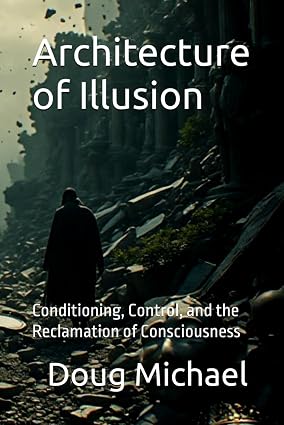
What if much of what we accept as reality is not something we have consciously examined, but something we have gradually learned to accept? What if the beliefs, assumptions, identities, and expectations that shape our lives are built upon foundations we rarely stop to question?
Architecture of Illusion explores the invisible structures that influence human perception and shape our understanding of the world. It examines the complex relationship between individual consciousness and the social environment in which it develops, revealing how conditioning, conformity, fear, and the desire for security can quietly influence the way we think and live.
From the machinery of consensus and the psychological limitations imposed by our own identities to the seductive comfort of external authority, the book examines how easily independent judgment can be exchanged for acceptance and belonging. We are surrounded by narratives that tell us what to believe, institutions that claim to know what is best for us, and systems of influence that compete for our attention. Yet perhaps the most enduring structures of control are not necessarily the ones imposed from the outside. They are the ones we eventually internalize.
The architecture, in other words, is not merely built around us. We can become its caretakers.
But this examination is not simply an indictment of society, institutions, or the people who participate in them. Nor does questioning established narratives require us to reject everything familiar or assume that every alternative explanation is correct. Genuine discernment demands something more difficult than automatic acceptance or automatic opposition. It requires the willingness to examine evidence, challenge our own assumptions, acknowledge uncertainty, and remain open to the possibility that we may be mistaken. This is where the journey becomes personal.
Throughout the book, attention turns inward, toward the psychological fortresses we construct around our identities and the beliefs we defend, sometimes long after they have ceased to serve us. We explore the ways fear can narrow perception, how the need for certainty can become a prison, and how the desire to belong can lead us to surrender aspects of ourselves without ever recognizing the exchange.
The chapters invite readers to reconsider the relationship between the observer and the world being observed. They challenge the notion that freedom is simply a matter of changing external circumstances, suggesting that a deeper form of independence begins with reclaiming our attention, judgment, and responsibility. This does not mean withdrawing from the world or dismissing the value of cooperation, knowledge, and shared experience. It means participating consciously rather than surrendering our capacity to think for ourselves.
Ultimately, Architecture of Illusion is a book about reclamation. It is about recognizing the walls we have inherited, questioning the foundations upon which they stand, and finding the courage to step beyond the boundaries of familiar thinking. Its message is not that some people have awakened while others are beyond reach. We are all capable of being influenced, deceived, conditioned, and mistaken. The difference lies in our willingness to examine ourselves and reconsider what we have come to accept as truth. Awakening is not a title to claim or a position of superiority. It is an ongoing process of observation, humility, and personal responsibility.
The book does not promise a world free of uncertainty, nor does it offer another ideology to replace the ones it questions. Instead, it offers an invitation: to become more conscious of the forces shaping our perceptions, to distinguish genuine understanding from borrowed conviction, and to rediscover the freedom that comes from independent thought. The architecture may be complex, and its walls may be deeply familiar. But familiarity is not proof of truth, and the existence of a structure does not mean we are obligated to remain confined within it.
The purpose is not to tell us what to believe. It is to remind us that the responsibility to examine what we believe has always been our own.