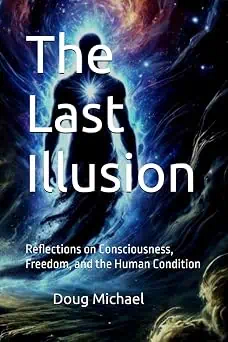
Inner Cosmos is a philosophical and psychological exploration of consciousness, perception, identity, and the hidden structures that shape human experience. While it continues many of the themes found throughout Doug Michael’s previous works, it represents a significant shift in focus. Rather than concentrating primarily on external systems of influence, Inner Cosmos turns inward, examining the architecture of the mind itself and the relationship between the individual and the deeper dimensions of consciousness. At its core, the book asks a deceptively simple question:
Who are we, really?
The answer unfolds through a series of interconnected explorations that challenge conventional assumptions about selfhood, reality, and human potential.
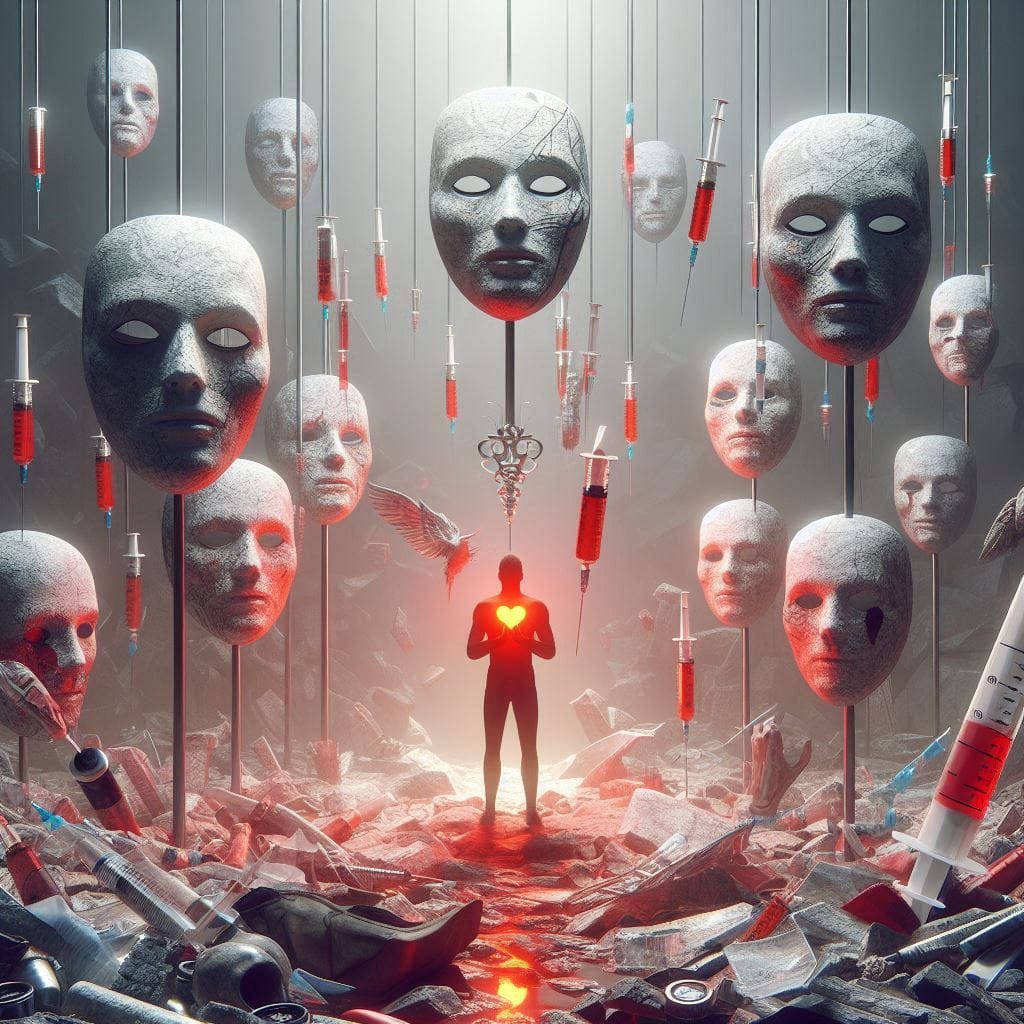
The central premise of the book is that most human beings experience life through a perceptual filter referred to as the Overlay, a collection of inherited beliefs, cultural conditioning, social programming, emotional wounds, assumptions, and cognitive habits that shape how reality is interpreted. Over time, these filters become so deeply ingrained that they are rarely questioned. The result is a life lived largely through secondhand perception, where inherited definitions of reality replace direct experience and authentic self-discovery.
Throughout the book, Michael argues that genuine transformation requires more than acquiring additional knowledge. It requires a process of dismantling false assumptions and examining the psychological structures that limit awareness. This theme emerges repeatedly through concepts such as cognitive fortresses, the inner schism, and perceptual redefinition. Rather than portraying awakening as the accumulation of wisdom, Inner Cosmos presents it as a process of uncovering what has been obscured beneath layers of conditioning.
One of the book’s strongest themes is the tension between individuality and interconnectedness. In chapters such as The Grand Paradox and Fragments of the Infinite, the reader is invited to contemplate the possibility that human beings are simultaneously unique individuals and inseparable expressions of a greater whole. This paradox serves as a foundation for much of the book’s philosophical framework. Rather than treating individuality and unity as opposing concepts, Michael presents them as complementary truths that coexist within a larger reality.
The work also explores the nature of duality and the human tendency to divide reality into rigid opposites. Joy and suffering, light and darkness, self and other, life and death are examined not as isolated forces in conflict, but as interconnected aspects of a larger process. Through this lens, many of the struggles of modern life emerge from our resistance to the natural tension of opposites rather than from the opposites themselves.
A recurring psychological theme involves the role of the ego. Rather than advocating for its destruction, the book argues that the ego serves a necessary function but becomes problematic when mistaken for the entirety of the self. Michael frequently employs metaphors such as the “falsely enthroned king” and the “deckhand who believes himself to be captain” to illustrate how identification with the ego creates division within the psyche. Healing, in this framework, comes not through eliminating aspects of oneself but through reconciliation and integration.
The deeply personal chapter When the Overlay Breaks serves as a pivotal point within the manuscript. Drawing upon the author’s experiences with Ayahuasca, the chapter explores altered states of consciousness, psychological healing, shadow integration, and encounters with what Michael describes as a deeper layer of awareness beneath ordinary thought. While the experiences themselves are intensely personal, they function within the broader narrative as an illustration of the book’s central themes: the dismantling of conditioning, the confrontation of buried trauma, and the rediscovery of a more expansive sense of self.
As the work progresses, the focus increasingly shifts toward self-realization and conscious evolution. Chapters such as The Forgotten Observer examine the tendency of modern culture to direct attention outward while neglecting the inner world. The book suggests that many social and collective imbalances reflect unresolved psychological divisions within individuals themselves. In this sense, personal transformation is presented not merely as a private endeavor but as a necessary foundation for broader cultural change.
The final chapter, Unbecoming, brings the book’s themes to their natural conclusion. Here, enlightenment is framed not as acquisition but as subtraction. Growth becomes an act of unlearning rather than accumulation. Drawing upon the metaphor of a sculptor removing stone to reveal the form hidden within, Michael proposes that much of human development consists of shedding illusion, conditioning, fear, and false identity. What remains is not something new, but something that was present all along.
Ultimately, Inner Cosmos is less concerned with providing definitive answers than with encouraging deeper questions. It challenges readers to examine the assumptions through which they perceive themselves and the world. It asks whether consciousness may be more fundamental than commonly believed, whether separation is as absolute as it appears, and whether the journey toward understanding begins not in the outer world but within.
At once philosophical, psychological, spiritual, and deeply personal, Inner Cosmos serves as both an exploration of consciousness and an invitation to self-discovery. Its message is neither one of escapism nor blind optimism. Rather, it is a call to look inward, confront what has been hidden, and rediscover the vastness that exists beneath the layers of conditioning that define ordinary experience.
In the end, the book suggests that the greatest mystery is not the universe beyond us, but the one within us. And perhaps the most important journey we will ever undertake is the journey back to ourselves.