Overall Thesis
The Pattern and the Observer argues that much of what people experience as “self,” “choice,” and “freedom” is actually the result of unexamined mental conditioning. The book does not offer techniques for self‑improvement or promise a final state of enlightenment. Instead, it invites sustained observation of how thought, identity, belief, and awareness operate, and how seeing these processes changes their hold, even without resolving them.
Core Ideas by Major Sections
1. The Unexamined Self
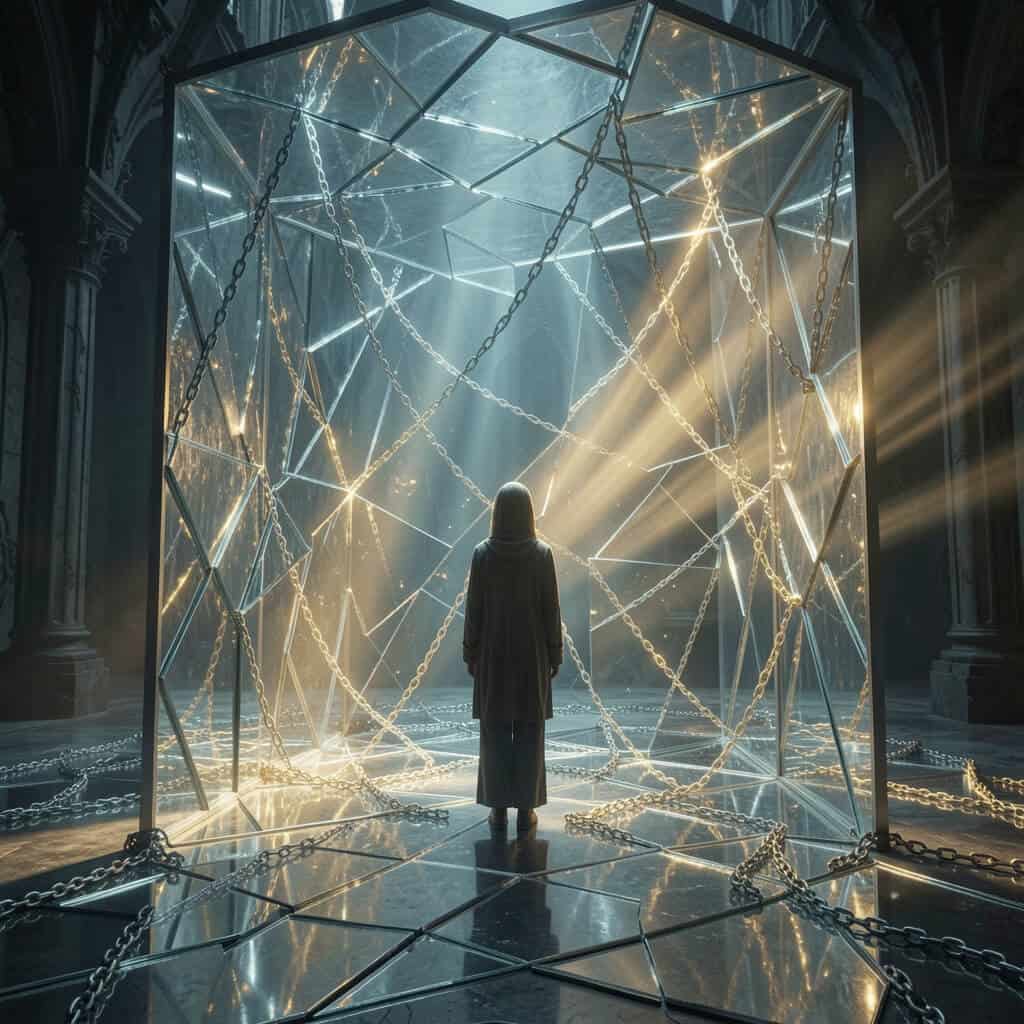
The book begins by asserting that most people live inside inherited psychological structures without realizing it. Beliefs, reactions, and identities feel personal and authentic, but are largely absorbed through repetition, authority, culture, and social reinforcement. Because these structures are unquestioned, they function as an invisible prison, one maintained not by force, but by identification and habit.
Key point: What feels like personality or freedom is often conditioned automation.
2. Authenticity in a Synthetic World
The text challenges modern notions of authenticity, arguing that expression is often mistaken for truth. In social and technological environments that reward conformity, even “being different” becomes scripted. True authenticity is not what is expressed, but where expression originates, whether it comes from observation or from unexamined conditioning.
Key point: Expression without examination is still repetition.
3. Autopilot, Reaction, and the Illusion of Choice
The book explains how most actions occur through conditioned loops: stimulus → thought → emotion → reaction. The mind later constructs a narrative of choice, preserving the illusion of control. Real choice, it argues, only becomes possible when there is a pause, however brief, between stimulus and response.
Key point: Awareness introduces space; space makes choice possible.
4. The First Step Outside the System
Stepping “outside the system” is described not as escape or transformation, but as the moment a pattern is noticed while it is happening. This recognition does not eliminate conditioning, but it fractures automatic identification with it. Most people retreat at this stage because awareness brings discomfort, uncertainty, and responsibility.
Key point: Freedom begins with seeing, not changing.
5. Life Outside the Pattern
After recognition, life does not become easier or clearer. Instead, certainty erodes. Narratives weaken. Identity becomes less stable. This creates a quieter but persistent awareness that reactions are no longer absolute, even when they still occur. Relationships, values, and motivations subtly reconfigure.
Key point: Awareness trades comfort for honesty.
6. The Discipline of Awareness
Awareness is shown to be fragile. Patterns reassert themselves, often by turning awareness into a new identity (“the one who sees”). Discipline here does not mean control or force, but returning to observation whenever awareness has been lost, without self‑justification or self‑criticism.
Key point: The discipline is noticing that you’ve forgotten.
7. Beyond the Machine (The Observer Questioned)
At a deeper level, the book questions the stability of the observer itself. The sense of a continuous “I” is examined and found to be constructed from memory, projection, and identification. When attention turns toward the observer, no fixed entity can be located, only experience itself.
Key point: Even the observer can become another pattern.
8. Living Without Needing Resolution
Rather than replacing illusion with new beliefs, the book emphasizes living with unresolved questions. The mind’s need for closure is seen as another pattern. Stability arises not from answers, but from the ability to tolerate uncertainty without forcing conclusions
Key point: Clarity does not require completion.
9. The Burden of Noticing & Social Denial
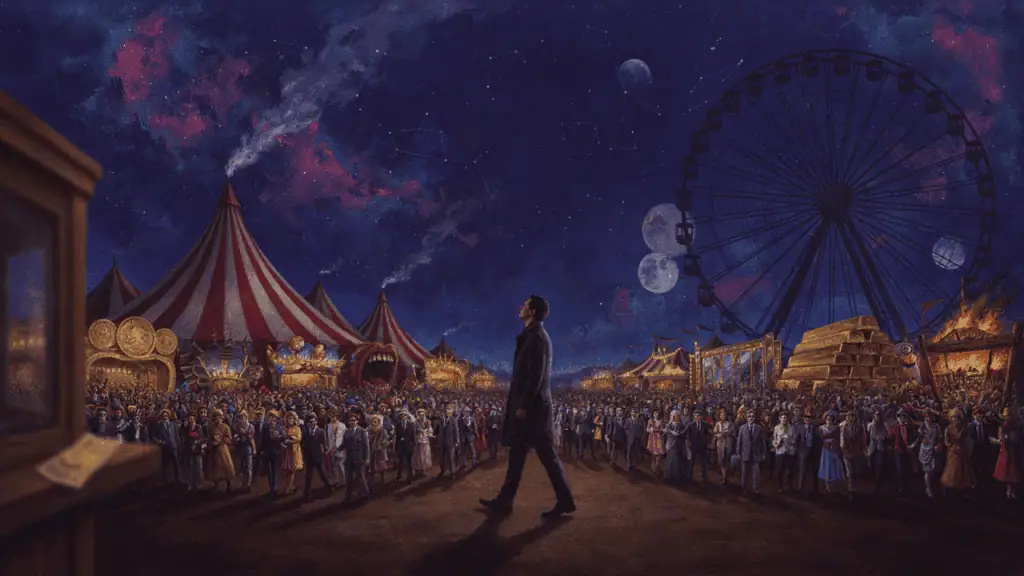
Later sections expand outward, applying the same mechanisms of conditioning to collective behavior, information saturation, social consensus, and modern denial. The text argues that widespread passivity is not stupidity but adaptation, attention overwhelmed, skepticism outsourced, and contradictions filtered for survival.
Key point: Denial today is selective engagement, not blindness.
10. Ending Without Conclusion
The book ends deliberately without a resolution. Awareness is not permanent, progress is not cumulative, and clarity is ordinary and fleeting. What remains is not a new identity or belief system, but a subtle, recurring capacity to notice, again and again, how experience is constructed as it happens.
Key point: Nothing is finished; life continues, seen or unseen.
Doug Michael is an independent writer focused on exposing the machinery behind perception, belief, and control. His work targets the unexamined assumptions people mistake for truth, dismantling the narratives that shape identity, behavior, and reality itself.
Blending psychological analysis with sharp social commentary, his books, including Tales from the Clown World, The Reality Code, and System Error, challenge readers to question everything they’ve been conditioned to accept. This is not writing for passive consumption. It is a confrontation.