
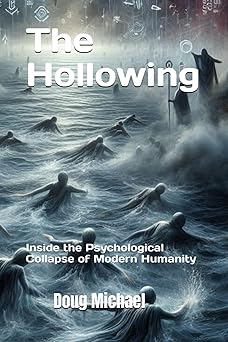
This book is a psychological and philosophical examination of modern control, not as a conspiracy imposed from above, but as a system sustained through internalized habits, conditioned perception, and voluntary compliance. Its central thesis is simple but unsettling: the most effective forms of domination operate with the consent of the dominated, and that consent is manufactured at the level of the mind.
Rather than framing control solely in political or institutional terms, the book focuses on psychological architecture: how narratives shape emotion, how repetition creates belief, how identity becomes a cage, and how consensus is mistaken for truth. It explores the ways media, technology, ideology, and social incentives subtly hijack perception, keeping individuals locked in fear, distraction, and reactivity, states in which autonomy and self-actualization are nearly impossible.
Crucially, the book does not stop at diagnosis. Each section moves deliberately toward integration and agency. Readers are guided through the internal consequences of awakening: the collapse of inherited meaning, the loneliness that follows seeing clearly, the temptation to replace one illusion with another, and the discipline required to remain sovereign in a culture that rewards conformity.
Themes such as voluntary slavery, leadership without followers, the reclaimed self, and conscious reality-creation reframe freedom as an internal condition rather than an external achievement. The work argues that no political, technological, or cultural solution can restore human dignity without individuals first reclaiming responsibility for their own perception, behavior, and moral alignment.
The final chapters emphasize that real change is quiet, non-performative, and difficult to commodify. Actualized individuals do not seek control, validation, or mass alignment. They stabilize systems simply by no longer being governed by fear or illusion. In this way, the book presents self-actualization not as self-indulgence, but as a civic and moral act.
Ultimately, this is not a book about overthrowing systems. It is about outgrowing them. It offers no ideology to adopt, no enemy to fight, and no promises of salvation. What it offers instead is orientation: a way of seeing clearly, standing independently, and living consciously in a world that increasingly depends on psychological fragmentation to function.